How to Get a Student Visa Step by Step (2026 Updated)
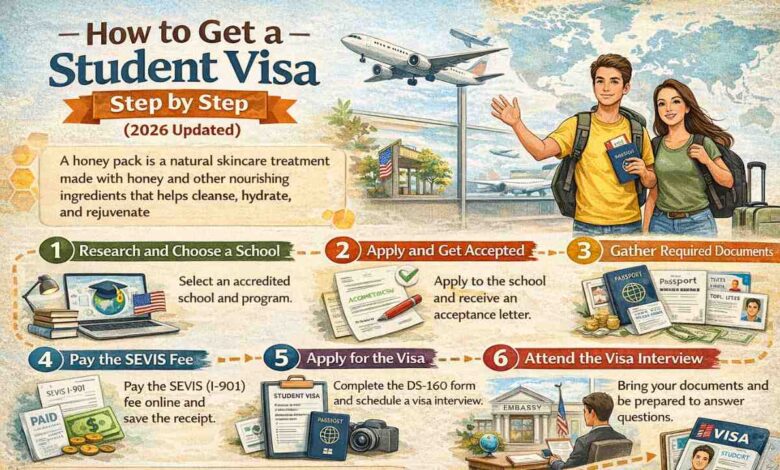
How to Get a US Student Visa
To get a US student visa, you must first get accepted by a SEVP-approved school, receive your I-20 form, pay the SEVIS fee, complete the DS-160 application online, schedule your visa interview at a US embassy, and attend the interview with your full documents checklist. The entire process typically takes 3 to 5 months.
US Student Visa Types at a Glance
| Visa Type | Purpose | Who Qualifies | Work Allowed? |
|---|---|---|---|
| F-1 Visa | Academic study | University/college students | On-campus only (20 hrs/week) |
| M-1 Visa | Vocational/technical training | Trade school students | Practical training only |
| J-1 Visa | Exchange programs | Exchange students/scholars | Yes, with restrictions |
Introduction
Dreaming of studying in the United States? You are not alone. Over one million international students enroll in US universities every year, making it the world’s top destination for higher education. But before you pack your bags, you need a clear study in USA guide to walk you through the visa process without confusion.
This guide covers everything from choosing the right visa type to acing your interview prep, building your documents checklist, and finding scholarship opportunities. Whether you are applying from Pakistan, India, Nigeria, or anywhere else, this step-by-step breakdown will make the process simple and stress-free.
What Is a US Student Visa and Why Does It Matter?
A US student visa is an official document that gives you legal permission to enter the United States for the purpose of studying at an approved educational institution.
Without it, you simply cannot enroll and attend classes in the USA, no matter how strong your acceptance letter is.
The most common type is the F-1 visa, designed for full-time academic students at accredited universities, colleges, and language training programs. The M-1 visa covers vocational and technical schools, while the J-1 visa is for exchange programs funded by government or private organizations.
Understanding which visa fits your situation is the first step in this study in USA guide.
Step-by-Step: How to Get a US Student Visa
Step 1: Get Accepted by a SEVP-Approved School
Your journey begins before the visa application even starts. You must first apply to and get accepted by a school that is approved by the Student and Exchange Visitor Program (SEVP).
You can verify if a school is SEVP-approved by checking the official SEVP school search tool maintained by the US Department of Homeland Security.
Once accepted, your school will issue you an I-20 form (Certificate of Eligibility for Nonimmigrant Student Status). This document is essential for every step that follows.
Key things your I-20 includes:
- Your program start and end dates
- Your SEVIS ID number
- Your school’s official information
- Estimated cost of attendance
Step 2: Pay the SEVIS I-901 Fee
Before you apply for your visa, you must pay the SEVIS (Student and Exchange Visitor Information System) fee.
- F-1 and M-1 students: $350
- J-1 exchange visitors: $220
You can pay this fee online through the FMJfee.com portal. Keep your receipt because you will need it at the visa interview.
This fee funds the system that tracks international students throughout their time in the USA, so it is not optional.
Step 3: Complete the DS-160 Online Application
The DS-160 is the standard non-immigrant visa application form required by the US Department of State. You fill it out entirely online through the Consular Electronic Application Center.
Tips for filling out the DS-160:
- Use your full legal name exactly as it appears on your passport
- Be honest and accurate on every question
- Save your application ID frequently to avoid losing your progress
- Upload a clear, recent passport-style photo
Once submitted, you will get a DS-160 confirmation page with a barcode. Print this and bring it to your interview.
Step 4: Pay the Visa Application Fee (MRV Fee)
The Machine Readable Visa (MRV) fee for an F-1 student visa is $185. This fee is non-refundable, even if your visa is denied.
Payment methods and processes vary by country. Visit your country’s specific US Embassy website to find out how to pay this fee locally.
After payment, you will receive a receipt that you need to schedule your visa interview appointment.
Step 5: Schedule Your Visa Interview
Once your fee is paid, you schedule your interview at the nearest US Embassy or Consulate in your home country.
Appointment availability varies a lot by location and season. During peak periods (May to August), wait times can stretch to several weeks or even months.
Pro tips for scheduling:
- Book your appointment as early as possible, ideally 3 to 4 months before your program start date
- Check multiple consulate locations if your nearest one has long waits
- Set up appointment alerts on the embassy website
Step 6: Prepare Your Documents Checklist
This is where most applicants either succeed or stumble. Having a complete and well-organized documents checklist is critical.
| Document | Details | Required? |
|---|---|---|
| Valid Passport | Must be valid at least 6 months beyond your stay | Yes |
| DS-160 Confirmation Page | Printed with barcode visible | Yes |
| I-20 Form | Issued and signed by your school | Yes |
| SEVIS Fee Receipt | Proof of I-901 SEVIS payment | Yes |
| MRV Fee Receipt | Proof of visa application fee payment | Yes |
| Visa Photo | Must meet US visa photo requirements | Yes |
| Academic Transcripts | High school and/or university records | Strongly recommended |
| Test Scores | TOEFL, IELTS, SAT, GRE, GMAT | Strongly recommended |
| Financial Documents | Bank statements, sponsor letters, scholarship letters | Yes |
| Ties to Home Country | Property ownership, family, job offer after graduation | Recommended |
Step 7: Attend the Visa Interview (Interview Prep)
The visa interview is the most important part of the entire process. A consular officer will ask you questions to determine your intent and eligibility.
Good interview prep can make the difference between a visa approval and a denial.
Common visa interview questions:
- Why do you want to study in the USA?
- Which school are you attending and what is your program?
- How will you fund your education?
- What are your plans after graduation?
- Do you have family or property ties in your home country?
Interview prep tips:
- Speak clearly, confidently, and honestly
- Keep answers short and direct
- Bring all documents organized in a folder
- Do not memorize scripts; speak naturally
- Show strong ties to your home country to prove you plan to return
The interview usually lasts only 3 to 5 minutes. The officer is looking for genuine students with a clear plan and honest intent.
Step 8: Wait for Visa Processing
After your interview, the officer will either approve your visa on the spot or send your passport for additional processing called “administrative processing.”
Standard processing takes 3 to 5 business days. Administrative processing can take several weeks.
You can track your visa application status through the CEAC Status Check portal.
Financial Requirements: How Much Money Do You Need?
One of the most common reasons for visa denial is failing to prove sufficient financial support. The consular officer needs to see that you can afford your education and living expenses for at least the first year.
| Expense Category | Estimated Annual Cost (USD) |
|---|---|
| Tuition (Public University) | $20,000 to $35,000 |
| Tuition (Private University) | $35,000 to $60,000 |
| Housing and Meals | $10,000 to $18,000 |
| Health Insurance | $1,500 to $3,000 |
| Books and Supplies | $1,000 to $2,000 |
| Personal Expenses | $3,000 to $5,000 |
| Total Estimated Cost | $35,000 to $80,000+/year |
Acceptable financial proof includes bank statements, scholarship award letters, sponsor affidavits, or financial guarantee letters from your school.
Scholarship Guide: How to Fund Your US Education
The cost of studying in the USA is high, but a solid scholarship guide can open doors you did not know existed. Thousands of scholarships are available specifically for international students.
Types of Scholarships Available
Merit-based scholarships are awarded based on academic performance, test scores, and achievements. Many top US universities offer these automatically to high-performing applicants.
Need-based scholarships take your financial situation into account. Schools like Harvard, MIT, and Yale offer generous need-based aid packages to international students.
Government-funded scholarships include programs like the Fulbright Program, which is one of the most prestigious scholarship opportunities for international students worldwide.
External scholarships come from private organizations, corporations, and foundations. Examples include the Aga Khan Foundation Scholarship, the Joint Japan/World Bank Scholarship, and the AAUW International Fellowships.
Best Resources for International Student Scholarships
- Scholarships.com for a comprehensive database
- EducationUSA for US government scholarship information
- Your target university’s financial aid office website
- Your home country’s Ministry of Education scholarship programs
US Student Visa Timeline
| Timeline | Action to Take |
|---|---|
| 12 to 18 months before | Research universities, take standardized tests (TOEFL, SAT, GRE) |
| 9 to 12 months before | Apply to universities, apply for scholarships |
| 6 to 9 months before | Receive I-20, pay SEVIS fee, complete DS-160 |
| 4 to 6 months before | Schedule and attend visa interview |
| 1 to 3 months before | Receive visa, book flights, arrange housing |
| 1 to 2 weeks before | Prepare for departure, pack essentials, confirm enrollment |
Common Reasons for US Student Visa Denial
Understanding why visas get denied helps you avoid the same mistakes. Here are the most common reasons:
- Insufficient financial proof: You did not show enough funds to cover your studies
- Weak ties to home country: The officer believes you may overstay your visa
- Inconsistent answers: Your story did not match your documents
- Incomplete application: Missing documents or incorrect DS-160 information
- Prior immigration violations: Previous US visa overstays or denials
- Unclear study plan: You could not clearly explain why you chose that specific school or program
If denied, you will receive a written reason. You can reapply after addressing the issue. There is no waiting period mandated by law, but reapplying too quickly without fixing the problem will likely lead to another denial.
Expert Tips to Strengthen Your Visa Application
These insider strategies come from experienced immigration consultants and successful student visa applicants:
- Apply to multiple schools so you have backup options if one falls through.
- Start your documents checklist early and organize everything in labeled folders.
- Use a consistent financial story. Your bank statements, sponsor letter, and I-20 estimated costs should all align logically.
- Practice your interview prep with a friend or mentor who asks tough questions.
- Show a clear post-graduation plan tied to your home country. Mention job prospects, family business, or career goals back home.
- Get your English test scores early. TOEFL and IELTS appointments book up fast, especially in smaller cities.
- Check your DS-160 three times before submitting. Small errors can cause delays or denials.
Study in USA Guide: After You Arrive
Getting the visa is just the beginning. Once you arrive in the USA, keep these things in mind:
- Report to your school’s DSO (Designated School Official) within 30 days of your program start date
- Maintain full-time enrollment every semester to keep your F-1 status active
- Do not work off-campus without proper authorization (OPT or CPT)
- Keep your passport and I-20 valid at all times
- Inform your DSO about any changes to your program, address, or financial situation
Violating your student visa terms can lead to deportation and a permanent bar from reentering the USA. Stay informed and compliant throughout your entire stay.
FAQ Section
1. What is the difference between an F-1 and a J-1 visa in this study in USA guide?
The F-1 visa is for students enrolled in academic programs at SEVP-approved universities, colleges, and language schools. You apply for it independently, and your school issues you an I-20 form. The J-1 visa is specifically for exchange visitors who are part of a program sponsored by a government agency, university, or approved private organization. J-1 holders often have their funding tied to the exchange program. J-1 students may also face a two-year home residency requirement after finishing their program, meaning they must return home for two years before applying for certain US visas. For most traditional students, the F-1 is the correct choice.
2. How long does the US student visa application process take?
The full process from school acceptance to visa approval typically takes 3 to 5 months. This includes the time needed to receive your I-20, pay the SEVIS fee, complete your DS-160, schedule your interview, and wait for processing. In countries with high visa demand, interview appointments alone can take 4 to 8 weeks to secure. Administrative processing after the interview can add another 2 to 8 weeks in some cases. This is why this study in USA guide strongly recommends starting the process at least 6 months before your intended program start date.
3. How do I prepare a strong documents checklist for my student visa interview?
A strong documents checklist starts with the mandatory items: valid passport, DS-160 confirmation, I-20, SEVIS fee receipt, MRV fee receipt, and a visa photo. Beyond that, you should bring supporting documents that strengthen your case. These include official bank statements for the past 6 months showing sufficient funds, sponsor letters with their own financial proof, scholarship award letters if applicable, your academic transcripts and test scores, proof of ties to your home country (property documents, family certificates, or a future job offer), and your university acceptance letter. Organize everything in a clean folder and arrange it in the order you expect to present it.
4. What financial documents do I need to prove I can afford to study in the USA?
You need documents that prove you have enough money to cover at least your first year of study, and preferably all four years. Accepted financial documents include personal bank statements (showing a consistent balance, not a sudden large deposit), parents or sponsors’ bank statements, a notarized sponsor affidavit, a scholarship award letter from your university or an external organization, or an education loan approval letter from a reputable bank. The total amount must match or exceed the estimated cost of attendance listed on your I-20. Sudden large deposits right before the interview raise red flags, so maintain consistent balances over several months.
5. What happens if my US student visa is denied?
A visa denial is not the end of your dreams of studying in the USA. You will receive a written explanation citing the specific legal reason for the denial. The most common reasons include insufficient financial proof, weak ties to the home country, and incomplete applications. You can reapply after addressing the issue. Before reapplying, carefully review your denial reason, strengthen your weak areas, update your documents checklist, and redo your interview prep to improve your answers. Many students successfully receive their visa on the second or third attempt after making targeted improvements to their application.
6. Can I work while studying in the USA on an F-1 visa?
Yes, but with strict limitations. F-1 visa holders can work on-campus for up to 20 hours per week during academic sessions and full-time during school breaks. Off-campus work requires special authorization through CPT (Curricular Practical Training) or OPT (Optional Practical Training). CPT allows you to work off-campus as part of your academic curriculum. OPT allows up to 12 months of work authorization after graduation, which can be extended to 36 months for STEM graduates. Working without proper authorization is a serious violation of your visa status and can result in deportation and future visa bans. Always consult your school’s DSO before taking any employment.
7. What English proficiency tests do I need for a US student visa?
Most US universities require proof of English proficiency for non-native speakers. The most accepted tests are TOEFL iBT (Test of English as a Foreign Language) and IELTS Academic. Some universities also accept Duolingo English Test or PTE Academic. Typical score requirements vary by university and program. Most undergraduate programs require a TOEFL score of 79 to 100 or IELTS 6.0 to 7.0. Graduate programs often require higher scores. Some universities offer conditional admission with an English language bridge program if your scores are slightly below requirement. Check your specific target school’s requirements as part of your study in USA guide planning.
8. Is there a scholarship guide for Pakistani or developing country students applying to US universities?
Yes, several strong scholarship options exist for students from Pakistan and other developing nations. The Fulbright Program is the flagship US government scholarship offering full funding for master’s and PhD students. The HEC (Higher Education Commission) of Pakistan offers government-funded scholarships for US universities. The Aga Khan Foundation provides need-based scholarships for outstanding students from select countries. Many US universities, including Yale, Columbia, and Michigan, offer need-based aid to international students regardless of nationality. Additionally, organizations like USAID and the Open Society Foundations offer targeted funding. A strong scholarship guide strategy involves applying to 8 to 12 funding sources simultaneously.
9. Can I bring my family to the USA on an F-1 student visa?
Yes, your immediate family members (spouse and unmarried children under 21) can accompany you to the USA on an F-2 dependent visa. To apply for F-2 status, your family members need a copy of your I-20, proof of your enrollment, and proof of sufficient financial support that covers both your studies and their living expenses. F-2 visa holders cannot work in the USA under any circumstances. Children on F-2 status can attend school. Your spouse on F-2 cannot enroll in full-time academic study, though part-time study for recreational purposes may be allowed. Always check the latest USCIS rules as policies can update.
10. What are the best US universities for international students?
The best universities for international students depend on your field of study, budget, and goals. MIT, Stanford, Harvard, and Caltech consistently top global rankings in STEM fields. For business, Wharton, Harvard Business School, and Chicago Booth lead the way. For liberal arts, Williams College, Amherst, and Pomona College offer exceptional education with generous financial aid to international students. State universities like University of Michigan, UCLA, and UT Austin offer strong programs at comparatively lower tuition. When using this study in USA guide, consider not just rankings but also scholarship availability, cost of living in the city, campus culture, and career placement rates in your specific field.
Conclusion
Getting a US student visa is a detailed process, but it is completely achievable when you follow the right steps. This study in USA guide has walked you through everything from choosing your visa type to crushing your interview prep, building a solid documents checklist, and using a smart scholarship guide to fund your education.
The biggest lesson is simple: start early, stay organized, and be honest throughout the process. The USA remains the world’s leading destination for higher education, and thousands of international students successfully navigate this process every year.
Take it one step at a time, use official resources like EducationUSA for guidance, and do not be afraid to ask your school’s international student office for help. Your dream of studying in the USA is closer than you think.


